Tea Batch Testing: Why One Good Test Does Not Guarantee All Stock
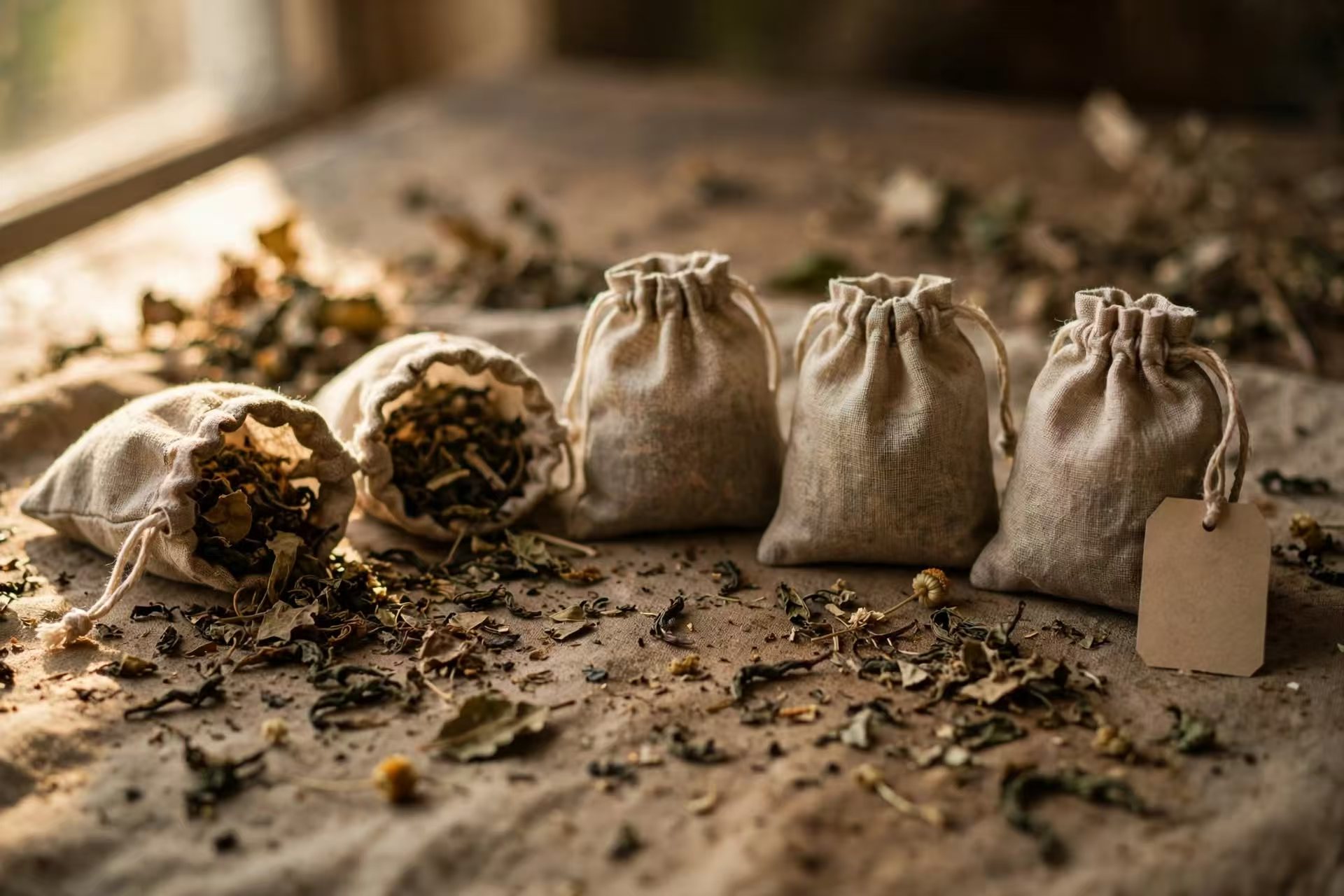
A supplier hands you a lab report showing a clean result. One sample, tested, passed. It is tempting to file that paper and treat the entire shipment as verified. But a single test describes a single sample — not the thousands of grams sitting in every carton of the lot.
Understanding the limits of batch testing is one of the most useful skills a tea buyer can have. It changes the questions you ask, the reports you accept, and the confidence you place in a "tested and passed" claim.
A test result describes a sample, not a mountain
When a lab tests tea, it does not analyze the whole shipment. It receives a small sample — a scoop from a bag, a draw from a drum, a portion of a carton. The result applies to the material in that container. Everything else in the lot is inferred.
That inference is where the risk lives. A lot is rarely uniform down to the last leaf. Residues, contaminants, or moisture can vary from one part of a shipment to another. A treatment might be unevenly applied in the field. A contaminated bag might be tucked into one corner of a pallet. A storage problem might affect only the cartons nearest a damp wall.
If the sample happens to come from the clean portion, the result will look reassuring while the problem sits elsewhere in the lot. This is not a failure of the lab. It is the nature of sampling.
Sampling is statistical, not a magic trick
The formal way to say this is that sampling is statistical. Testing one bag from a lot does not prove that every bag is compliant. General sampling principles, such as those reflected in ISO 2859, exist precisely because a sample can only ever give a probability-based picture of a larger lot.
It helps to use a simple analogy. Imagine tasting one spoonful of a large pot of soup. If the soup is well stirred, one spoonful tells you a lot. If the seasoning was added unevenly and the pot was not stirred, one spoonful might tell you very little about the rest. A tea lot is somewhere in between — and how the sample was taken matters as much as how it was tested.
This is why the phrase "representative sample" appears so often in testing discussions. A representative sample is one collected in a way that gives each part of the lot a fair chance of being included. A sample that is easy to grab — the top of one open bag, the first carton off the truck — is rarely representative.
A proper sampling plan addresses questions like: How many portions were taken? From where in the lot? Were they combined into a composite sample? Who collected them? A COA that says only "sample tested: passed" leaves all of those questions unanswered.
What the regulations say about sampling
The importance of sampling is not just theory; it appears in the official rules. In the EU, Regulation (EC) No 333/2007 sets out sampling and analysis methods for trace elements and contaminants. It exists because the way a sample is taken affects whether the result means anything at all.
The regulation also addresses measurement uncertainty. Results may be reported as a value plus or minus an uncertainty, written x +/- U with a coverage factor of 2, roughly 95 percent confidence. A lot is accepted when the result does not exceed the maximum level after uncertainty and recovery are taken into account, and rejected when it exceeds the limit beyond reasonable doubt. So even a single result is interpreted with a margin around it, not as a perfect point measurement.
In the United States, the FSVP rule — 21 CFR Part 1 Subpart L — requires importers to establish written verification procedures and to document which activities they will use and how often. Sampling and testing is one of the allowed verification activities. Importantly, the rule treats testing as part of a system: you decide and document the frequency, and the records must capture the details.
FSVP sampling and testing records must include the lot number, the samples tested, the tests and analytical methods used, the dates, the results, any corrective actions, the lab identification, and confirmation that testing was performed by a qualified individual. That list is effectively a specification for a defensible testing program. If your supplier's report is missing most of these fields, the record is weak even if the single number looks good. We cover the anatomy of a good report in how to read a tea lab test report.
Why "one good test" fails in practice
There are several recurring ways a single clean test gives false comfort.
- The sample was not representative. It came from one bag or one easy-to-reach spot rather than across the lot.
- The lot was not homogeneous. Contamination or residue was concentrated in part of the shipment.
- The wrong analytes were tested. A report covering one group of pesticides says nothing about substances that were not included.
- The method's detection limit was too high. A "not detected" result can simply mean the method could not see the amount present. LOD and LOQ matter here.
- The report was not tied to the lot. A clean COA for a different lot number is not evidence about your goods.
- Timing was off. Residue levels can change with time and conditions; an old report says less about the current stock.
Each of these is a reason to ask more of a test report than a single pass/fail line.
Building a testing program that actually helps
The goal is not to test everything — that is impractical. The goal is a program where the testing you do is meaningful and the paperwork supports it.
- Define your lots clearly. A COA should name the lot it belongs to. Match lot numbers on the report, the invoice, and the cartons.
- Ask how samples were collected. Who took them, from how many points, and were they combined into a composite sample?
- Match the scope to the risk. Make sure the analytes tested are the ones relevant to the product and market.
- Check the lab. ISO/IEC 17025 accreditation is the international standard for testing laboratory competence. Our guide to third-party tea testing labs explains what accreditation tells you.
- Use testing as one input, not the only one. Combine it with supplier evaluation, audit history, and storage controls. Under FSVP, verification activities can include onsite audits, sampling and testing, review of supplier records, or other appropriate activities.
- Correct and document. When a result is out of spec, record the corrective action. A clean program is one that responds to problems, not one that never finds any.
If you want to understand how samples are handled once they reach a laboratory, our article on how tea samples are tested in EU labs walks through the process.
Bottom line
A lab result describes the sample that was tested, not every bag in the lot. Because sampling is statistical, one good test cannot prove that all your stock is compliant — uneven residues, non-representative sampling, narrow test scope, and detection limits all leave gaps. Treat a COA as one piece of evidence: check that it is tied to the right lot, asks the right questions, and comes from a competent lab. Combine testing with supplier evaluation and clear written procedures, as the FSVP framework expects.
Sources & further reading
- 21 CFR Part 1 Subpart L (FSVP) — https://www.ecfr.gov/current/title-21/chapter-I/subchapter-A/part-1/subpart-L
- Regulation (EC) No 333/2007 (sampling/analysis) — https://eur-lex.europa.eu/legal-content/EN/TXT/HTML/?uri=CELEX:02007R0333-20191214