Mycotoxin Risk In Stored Tea: Mold Testing And Prevention
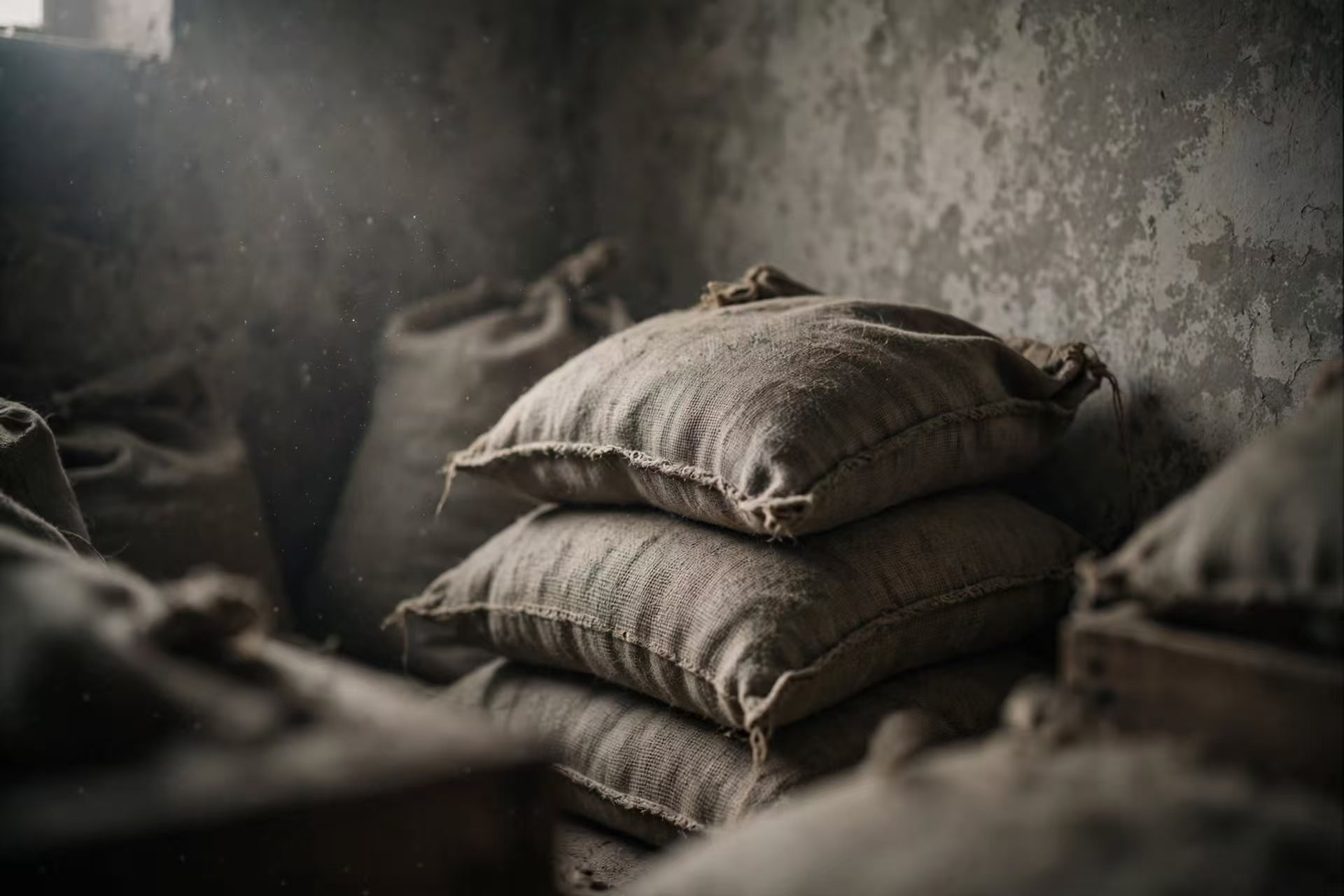
Tea is a dried agricultural product, and dried does not mean inert. Left in the wrong conditions, tea can pick up moisture, grow mold, and develop contaminants that were never present in the fresh leaf. For importers and anyone storing tea in bulk, the storage warehouse is part of the safety equation — not just an address on a invoice.
This article explains the connection between storage conditions, mold, and mycotoxins, and sets out what testing can realistically tell you. One point needs to be clear early: EU contaminant law does not set a dedicated ochratoxin A limit specifically for tea. If someone quotes you a specific tea mycotoxin number as if it were an EU legal limit, be skeptical and check the official text.
Why tea is vulnerable to moisture
Tea is hygroscopic. That is a technical way of saying it readily absorbs moisture and odors from the surrounding air. A dried leaf has a large surface area and a structure that readily takes up water vapor when the air around it is humid.
This matters because mold needs moisture to grow. High humidity plus poor storage creates conditions where mold can develop on stored tea. The risk increases when tea is held in permeable packaging, in a damp warehouse, or in a space where temperature and humidity swing widely. A bag that left the producer dry can slowly take on moisture during weeks in a port or a storeroom.
The practical takeaway is simple: storage is not a neutral backdrop. It can protect the product or quietly undermine it.
From mold to mycotoxins
Mold itself is visible and, in many cases, obvious — musty smell, discolored leaf, clumping. The deeper concern is what certain molds can produce. Some species of *Aspergillus* and *Penicillium* are capable of producing mycotoxins, including ochratoxin A, under the right conditions.
A mycotoxin is a toxic compound produced by a mold. The important nuance for tea buyers is that the presence of mold does not automatically mean mycotoxins are present, and the absence of visible mold does not guarantee they are absent. Mycotoxin contamination depends on the mold species, the conditions, and the length of time the product was exposed. It is a risk to be managed and tested for, not something you can reliably judge by eye.
This is why a responsible supplier treats storage as a controlled process. Tea should be kept cool, dry, sealed, and away from light and strong odors. Stock should also be rotated first-in, first-out so that older lots are used before they sit for extended periods. None of this is complicated, but each part reduces the chance that a batch will sit in conditions where mold can establish.
Pu-erh and the humidity balancing act
Pu-erh is a special case worth calling out, because it is often stored deliberately. Aging pu-erh requires a controlled amount of humidity — too dry and the aging process stalls, too wet and the tea can mold or rot.
That is a legitimate traditional practice, but it sits right next to the mold risk described above. Controlled aging is not the same as leaving tea in a damp room. The difference is control: a deliberate, monitored environment versus accidental exposure. If a supplier describes pu-erh storage in vague terms — "aged in a humid warehouse" — ask how humidity is monitored and how the tea is inspected during aging. We go deeper into this in pu-erh storage and humidity.
One related myth deserves a brief mention. Aging does not reliably remove pesticide residues to safe levels; degradation depends on the substance, the time, and the conditions. The same caution applies here: do not assume that time in storage solves a contamination problem. Time can just as easily create one.
The EU legal picture: no dedicated tea ochratoxin limit
Here is the point that catches many people out. EU contaminant maximum levels are set in Commission Regulation (EC) No 1881/2006. That regulation covers a wide range of contaminants, including mycotoxins such as aflatoxins, ochratoxin A, Fusarium toxins, patulin, citrinin, and ergot alkaloids, as well as metals and other contaminants.
Regulation 1881/2006 sets ochratoxin A limits for products such as wine, coffee, dried fruit, and spices. There is no dedicated ochratoxin A limit specifically for tea in that annex. If you are told that tea must stay below a particular EU ochratoxin number, ask to see the exact legal citation — because the dedicated tea limit many people assume exists does not, in that annex.
Two general principles from the regulation are still highly relevant. First, food above the applicable annex limits may not be sold. Second, the regulation includes a ban on mixing compliant food with non-compliant food. In other words, you cannot dilute a problem batch by blending it with clean stock. That principle applies to contaminants generally and is a useful reminder that blending is not a shortcut around a storage problem.
The practical consequence for tea buyers is that you cannot simply point to a single EU tea number for ochratoxin A. Instead, buyers rely on import controls, national enforcement, and their own COA testing to manage the risk. The official consolidated text linked in the sources section is the place to verify the current rules.
What testing can tell you — and what it cannot
Since there is no dedicated tea limit to lean on, testing and documentation matter more. But a test result is only as useful as the sampling and the method behind it.
Regulation (EC) No 333/2007 sets out sampling and analysis methods for trace elements and contaminants. One important concept from that framework is measurement uncertainty. Results may be reported as a value plus or minus an uncertainty, written as x +/- U, with a coverage factor of 2, which corresponds to roughly 95 percent confidence. A lot is accepted if the result does not exceed the maximum level once uncertainty and recovery are taken into account, and rejected if it exceeds the limit beyond reasonable doubt.
The lesson is that a single number on a lab report is not the whole story. When you review a contaminant report, look for the method used, the result with its unit, and how the lab handled uncertainty. Our guide to reading a tea lab test report covers the fields that should appear on a proper COA.
Two more terms are worth knowing. LOD, the limit of detection, is the lowest amount a method can detect. LOQ, the limit of quantification, is the lowest amount that can be measured with acceptable precision and accuracy. A result reported as "not detected" does not mean zero — it means the substance was below the method's ability to detect it. That distinction matters when you are comparing reports from labs using different methods.
Building prevention into your routine
Testing catches problems after the fact. Prevention keeps them from happening.
- Store tea cool, dry, sealed, and away from light and odors. Simple conditions, consistently applied, reduce mold risk.
- Rotate stock first-in, first-out. Older lots should not be forgotten at the back of a shelf.
- Inspect incoming lots. Musty smells, visible mold, and clumping are reasons to questions a shipment.
- Ask suppliers about storage controls. Especially for pu-erh, ask how humidity is managed during aging.
- Request contaminant testing from a competent lab. Look for labs accredited to ISO/IEC 17025, the international standard for testing laboratory competence. Our overview of third-party tea testing labs explains what to look for.
Bottom line
Tea absorbs moisture, and poor storage can lead to mold and potential mycotoxin contamination. Some *Aspergillus* and *Penicillium* molds can produce ochratoxin A, but its presence cannot be judged by eye — which is why sampling, testing, and good documentation matter. EU law sets contaminant limits in Regulation 1881/2006 and bans mixing non-compliant with compliant food, but it does not set a dedicated ochratoxin A limit for tea. Store tea cool, dry, and sealed, rotate stock, and verify claims with competent lab reports rather than trusting a single number.
Sources & further reading
- Regulation (EC) No 1881/2006 (contaminants) — https://eur-lex.europa.eu/legal-content/EN/LSU/?uri=CELEX:32006R1881
- Regulation (EC) No 333/2007 (sampling/analysis) — https://eur-lex.europa.eu/legal-content/EN/TXT/HTML/?uri=CELEX:02007R0333-20191214