FDA Tea Import Rules: What You Need To Know Before Buying Chinese Tea
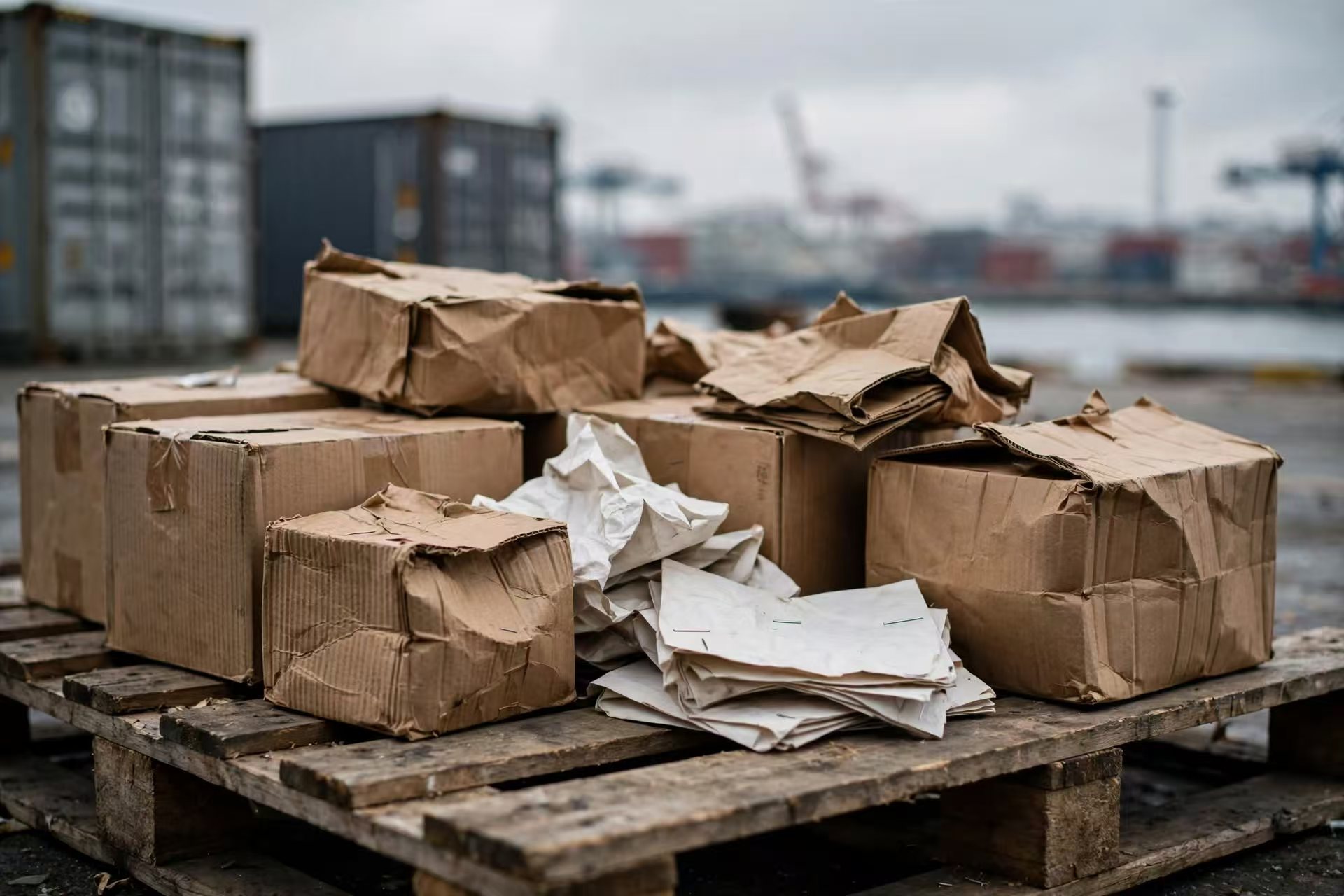
Tea arriving in the United States is food under FDA jurisdiction. That means a set of rules applies before the container is even packed — and a missed step can hold your goods at the port. If you are buying Chinese tea for the US market, the three things that trip people up are facility registration, Prior Notice, and supplier verification.
This guide walks through those requirements in plain English, using the actual regulations rather than rumour.
Three separate hurdles, not one
New importers often assume "FDA approval" is a single switch. It is not. At least three distinct obligations can apply to the same shipment:
- Facility registration — the foreign facility that made or packed the tea must be registered with FDA.
- Prior Notice — FDA must be told about the shipment in advance, with specific data and strict timing.
- FSVP — the US importer must have a Foreign Supplier Verification Program showing the supplier meets US public health protections.
They are governed by different parts of the rules and enforced in different ways. Satisfying one does not satisfy the others.
Facility registration: the step people forget
US and foreign facilities that manufacture, process, pack or hold food for US consumption must register with FDA under section 415 of the FD&C Act. This applies to a tea producer in China just as it does to a packer in the United States.
Prior Notice alone is not enough. Under § 1.285, food from an unregistered facility can be held under section 801(l) of the Act. A valid registration number must then be submitted within 30 calendar days. That is a costly way to learn about a registration requirement, so confirm your supplier's registration status before you ship.
Ask your supplier for their FDA registration number and keep it on file. Then check that the name and address on the shipment match the registration — mismatches cause problems.
Prior Notice: telling FDA before the tea arrives
Prior Notice comes from 21 CFR Part 1, Subpart I. Under § 1.277(a), it applies to all food for humans or animals that is imported or offered for import. That includes gifts, samples, transshipments, and goods going into foreign trade zones.
There are exemptions in § 1.277(b), such as food carried with a traveller for personal use, non-commercial personal gifts, food imported and then exported without leaving the port, certain USDA-exclusive meat, poultry and egg products, and diplomatic mail. Commercial tea shipments do not normally fit these exemptions.
The timing rules matter most
Prior Notice must be submitted and confirmed by FDA for review no less than (§ 1.279):
- 2 hours before arrival for road transport;
- 4 hours before arrival for rail or air;
- 8 hours before arrival for water (vessel) transport.
For international mail, Prior Notice must be given before the article is sent to the United States (§ 1.279(c)).
There is also an earliest window. Via ABI/ACE/ITDS, you may submit no more than 30 calendar days before anticipated arrival; via the FDA Prior Notice System Interface (PNSI), no more than 15 calendar days (§ 1.279(b)).
If you remember nothing else, remember the mode-based hours. An 8-hour deadline for a vessel is easy to miss when everyone is thinking in days.
How to file, and what to include
Prior Notice must be submitted electronically to FDA (§ 1.280). The two routes are through the customs systems — ABI, ACE or ITDS — or through FDA's PNSI web interface. Information must be in English; names and street names may be in a foreign language, but they must appear in the Latin (Roman) alphabet (§ 1.280).
The data required under § 1.281 is detailed. It includes:
- submitter and transmitter information, entry type and FDA product code;
- the common or usual name of the food, quantity, and lot or code numbers;
- manufacturer or grower information, FDA country of production, shipper and country of shipment;
- port of arrival with date and time;
- importer, owner and ultimate consignee;
- mode of transport, carrier code and shipment details such as bill of lading, airway bill or vessel;
- whether the food has been previously refused by any country.
Much of this information exists in your shipping documents already. The practical task is making sure it is consistent everywhere — the same product name, the same lot number, the same grower. Inconsistency is what turns a routine filing into a query.
What happens when Prior Notice goes wrong
The consequences in § 1.283 are firm. No Prior Notice, inaccurate Prior Notice, or late Prior Notice leads to refusal of admission under section 801(m)(1) of the FD&C Act.
If that happens, you can re-submit within 10 calendar days of the refusal notice, or request FDA review within 5 calendar days. For international mail, CBP may hold the article for up to 72 hours. These are short windows, which is another reason to file correctly the first time.
FSVP: proving your supplier is under control
Separate from Prior Notice is the Foreign Supplier Verification Program, found in 21 CFR Part 1, Subpart L. Under § 1.502(a), the US importer must develop, maintain and follow an FSVP giving adequate assurance that the foreign supplier uses processes providing at least the same level of public health protection as US requirements, and complies with the relevant provisions of the Act.
For tea, that includes a written hazard analysis covering chemical hazards such as pesticide and drug residues, along with supplier evaluation, verification activities and recordkeeping. We cover the whole process in a dedicated guide — see the related reading link at the end — but the key point here is that FSVP is the importer's duty, not the supplier's. You cannot simply forward a supplier's certificate and consider the matter closed.
Import alerts and detention at the border
FDA uses Import Alerts as an enforcement tool. An alert can place a firm or product on detention without physical examination (DWPE), meaning the product may be held at the border without being examined; the importer must then provide evidence to overcome the appearance of a violation.
Two alerts worth knowing about:
- Import Alert 99-41 — DWPE based on FSVP violations.
- Import Alert 99-48 — detention of foods due to chemical contamination, covering a broad range of human-made chemicals including benzene, dioxins, PCBs and PFAS.
To be removed from an alert, a firm must provide evidence to FDA that it resolved the conditions that led to the violation. FDA's Regulatory Procedures Manual, Chapter 9-8, covers DWPE.
One important caution: there is no tea-specific FDA import alert. Tea is subject to general food, chemical and FSVP alerts. Be sceptical of anyone who quotes a "tea alert number" without verifying it against FDA's official Import Alert list.
A quick pre-shipment checklist
Before your Chinese tea leaves the factory, confirm:
- the manufacturing or packing facility's FDA registration is valid and matches the shipment documents;
- Prior Notice will be filed electronically within the correct window for your transport mode;
- all § 1.281 data points are consistent across your documents;
- your FSVP file is current for that supplier, including hazard analysis and verification records;
- you are not relying on an unverified claim about import alerts.
Bottom line
Importing Chinese tea into the US is manageable once you separate the obligations. The foreign facility must be registered with FDA; Prior Notice must be filed electronically with the right data and within the mode-specific hours (2, 4 or 8 hours) and earliest window (30 or 15 days); and as the US importer you must maintain an FSVP covering hazards such as pesticide residues. Getting it wrong can mean refusal of admission and very short windows to respond. Verify each item before the goods move, not after they arrive.
Sources & further reading
- 21 CFR Part 1 Subpart I (Prior Notice) — https://www.ecfr.gov/current/title-21/chapter-I/subchapter-A/part-1/subpart-I
- 21 CFR Part 1 Subpart L (FSVP) — https://www.ecfr.gov/current/title-21/chapter-I/subchapter-A/part-1/subpart-L
- FDA Import Alerts list — https://www.accessdata.fda.gov/cms_ia/ialist.html
- FDA PNSI (Prior Notice System Interface) — https://www.access.fda.gov/