Tea Import Alert: Understanding FDA Detention Notices
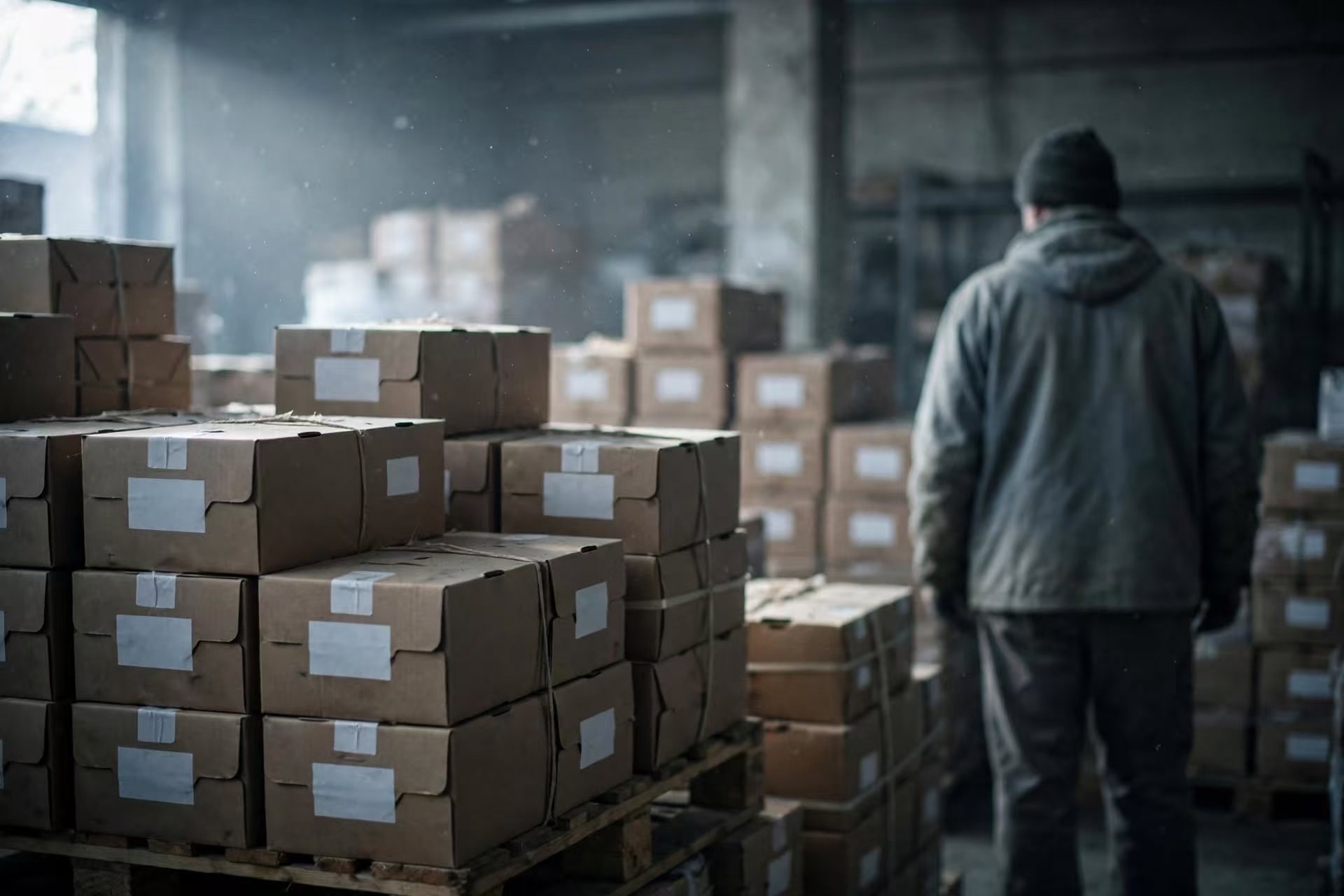
Imagine your tea arriving at a US port and being held — not because an inspector opened a carton and found a problem, but because your name or your product appears on a list. No sample was tested. No label was checked. The shipment is simply not allowed to move until you prove it should. For many small tea importers, this is the first and most confusing encounter with an FDA import alert.
This article explains what these alerts are, how detention without physical examination works, what people mean by the "red list" and "green list," and which general alerts can catch a tea shipment. There is an important starting point: there is no tea-specific FDA import alert. Tea is covered by broad food, chemical, and supplier-compliance alerts that apply across many products.
What an FDA import alert actually is
An FDA import alert is an enforcement tool. Its purpose is to stop products that appear to violate US law from entering the country. Rather than examining every single shipment from scratch, FDA publishes a list of firms and products that are subject to a particular concern.
When a product is on that list, FDA may detain it at the border. The alert does not need to prove that your specific shipment is bad. It creates an "appearance of a violation" based on the firm or product named. From there, the burden shifts to you, the importer, to provide evidence that overcomes that appearance.
Think of it as a shortcut for the regulator. If a supplier has a history of problems, FDA does not have to re-test every box. It can hold the shipment and ask the importer to show why this particular lot should be allowed in.
DWPE: detention without physical examination
The key phrase you will see is DWPE — detention without physical examination. This means the shipment can be held at the port without FDA opening a single package or running a single lab test.
This surprises people. After all, if nothing was examined, how can FDA say the tea is a problem? The answer is that DWPE is based on the record and reputation of the firm or product, not on testing of your individual lot. The alert identifies a pattern, and your shipment is treated as part of that pattern until you rebut it.
For a tea importer, DWPE has two practical consequences. First, your goods are stuck — and time at a port costs money, especially for a seasonal product. Second, you need paperwork. To get the shipment released, you generally provide evidence showing the conditions that led to the violation have been resolved. That might mean test results from an accredited lab, a corrected label, a valid supply-chain record, or other documentation relevant to the specific alert.
This is why experienced importers keep their documentation ready before goods ship, not after they are detained. A Certificate of Analysis (COA) that clearly identifies the lot, the analytes, the method, and the lab is far more useful during a detention than a vague assurance from a seller. Our article on how to read a tea lab test report walks through what a good report should contain.
Red list, green list: what the colors mean
The import alert system uses informal color labels that you will hear constantly in trade conversations.
The red list refers to firms that are currently subject to DWPE. If your supplier is on the red list for a relevant alert, shipments from them can be detained automatically. The red list is essentially the "detain these" list.
The green list refers to firms that have met the conditions for removal. A firm earns a place on the green list by providing FDA with evidence that adequately demonstrates it has resolved the conditions that gave rise to the violation. Once on the green list, the firm is no longer subject to automatic detention under that alert.
Moving from red to green is not automatic and it is not quick. It requires the firm — not just the importer — to satisfy FDA with evidence. For an importer, this is an important supplier-screening question: ask whether your supplier is on any import alert, and if so, whether they have taken steps to be removed. If a supplier cannot answer that question clearly, treat it as a warning sign.
The alerts that can affect a tea shipment
Because there is no dedicated "tea alert," importers need to understand the general alerts that can catch food products like tea. Two are especially worth knowing.
Import Alert 99-41 is associated with FSVP violations. FSVP — the Foreign Supplier Verification Program — is the US rule that requires importers to verify that their foreign suppliers produce food using processes that provide at least the same level of public health protection as US requirements. When an importer fails to have an adequate FSVP, FDA can respond with an import alert, and products can be placed under DWPE. FDA has cited 99-41 in FSVP-related enforcement, including a warning letter to a firm in 2021.
The lesson for tea buyers is direct: your FSVP obligations are not paperwork to be ignored. A written hazard analysis, a documented supplier evaluation, and defined verification activities are what protect you. We explain the framework in detail in FSVP for tea importers explained.
Import Alert 99-48 is titled "Detention without Physical Examination of Foods Due to Chemical Contamination." It covers a broad range of human-made chemicals, including benzene, dioxins, PCBs, and PFAS. FDA issued this alert as a constituent update in 2024. Tea is a food, so a tea shipment can fall within the scope of a chemical-contamination alert like this one if FDA has reason to apply it.
This alert reflects a broader point about chemical residues. Tea importers should not assume that a product is outside an alert simply because the alert is not tea-specific. The official and current list of alerts is maintained by FDA, and it is worth checking directly rather than relying on secondhand summaries. You can find it in the sources section below.
What to do if your shipment is detained
If your tea is held under DWPE, work methodically.
- Identify the exact alert. The alert number tells you what FDA is concerned about — FSVP documentation, chemical contamination, or something else. The response depends on the specific alert.
- Read the alert's conditions for release. Each alert describes what evidence FDA expects before a product can be released or a firm can be removed.
- Gather documents that match the concern. For residue or contamination issues, that usually means recent COAs from a reputable lab for the specific lot, with clear sampling and method details. For FSVP issues, it means your verification records.
- Consider the supplier relationship. If the problem originates with the supplier, your importer paperwork alone may not fix it. The supplier may need to provide evidence or correct its own practices.
- Keep records. FDA's FSVP rule requires records to be retained for at least two years after they are created or obtained, and a detention is exactly when those records earn their keep.
Prevention is simpler than a cure. Screening a supplier for warning letters, import alerts, and other FDA compliance actions is part of a proper supplier evaluation under FSVP. So is asking for test results and audit history before you commit to a shipment. Our guides to why tea fails US customs and FDA tea import rules cover the wider compliance picture.
A note on timing and prior notice
Detention is not the same as a prior-notice problem, but the two often arrive together in a stressful week. Prior notice must be submitted and confirmed by FDA before arrival, with different timing windows depending on how the goods travel — two hours before arrival by road, four hours by rail or air, and eight hours by water. International mail has its own rule: prior notice must be given before the article is sent to the US.
Missing or inaccurate prior notice can lead to refusal of admission, which is a separate outcome from DWPE detention. Keeping both housekeeping tasks in order — accurate prior notice and a solid FSVP — removes two of the most common reasons a tea shipment stalls.
Bottom line
An FDA import alert is a list-based enforcement tool, and DWPE lets FDA hold a shipment without physically examining it. The red list holds firms currently subject to detention; the green list holds firms that have met the conditions for removal. There is no tea-specific import alert, so tea buyers need to watch the general food, chemical, and FSVP alerts — notably 99-41 and 99-48. The best defense is a complete FSVP, careful supplier screening, and lab documentation that you can produce at short notice.
Sources & further reading
- FDA Import Alerts list — https://www.accessdata.fda.gov/cms_ia/ialist.html
- FDA Import Alert 99-48 (chemical contamination) Constituent Update — https://www.fda.gov/food/hfp-constituent-updates/fda-issues-import-alert-food-products-chemical-contaminants-including-pfas
- 21 CFR Part 1 Subpart L (FSVP) — https://www.ecfr.gov/current/title-21/chapter-I/subchapter-A/part-1/subpart-L
- 21 CFR Part 1 Subpart I (Prior Notice) — https://www.ecfr.gov/current/title-21/chapter-I/subchapter-A/part-1/subpart-I