Organic Tea vs Conventional Tea: Residue Test Differences
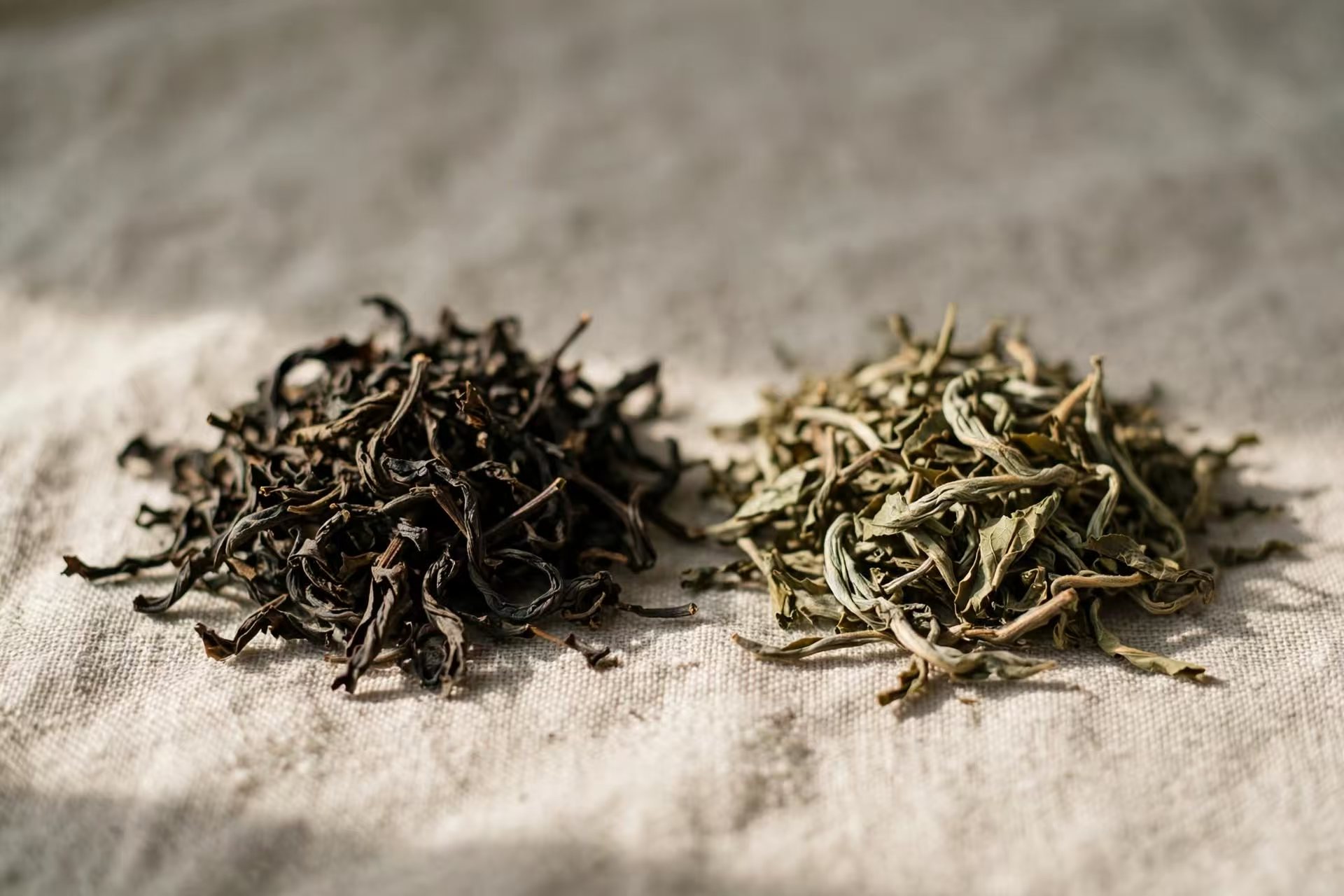
"Organic" is one of the most trusted words on a tea label, and also one of the most misunderstood. Many buyers take it to mean the tea was grown without any pesticide and therefore contains none. That is not what the term promises. Understanding the difference between a production standard and a test result will make you a sharper buyer.
This article explains what organic certification actually controls, why residues can still appear, and how to read the test data that sits behind any credible claim.
What "organic" actually means
Organic standards, including those used in the EU and the USDA National Organic Program (NOP), restrict which substances may be used in production. They are rules about how food is grown and handled — the inputs allowed, the records kept, the inspections passed.
That is a process standard. It is not a laboratory measurement of the finished tea. The important distinction is this:
- A process standard says what was permitted along the way.
- A residue test says what is actually in the sample in front of you.
Those two things usually line up, but they are not the same thing, and a certificate speaks to the first while a report speaks to the second.
Why organic is not a guarantee of zero residues
Here is the part that surprises people: organic certification is not a guarantee of zero residues. Drift and contamination can still occur.
A neighbouring field may be sprayed, and drift can carry material onto organic plants. Shared equipment, storage or transport can introduce contamination. Residues can persist in soil or the environment from earlier use. None of these mean an organic grower broke the rules; they mean that an agricultural product can pick up traces despite best efforts.
So the honest position is that organic status reduces the likelihood of certain residues, but it does not eliminate the possibility. This is exactly why residue testing still matters for organic tea just as it does for conventional tea. A buyer who treats the organic logo as a substitute for a test report is relying on a label instead of evidence.
Conventional tea is not automatically non-compliant
The mirror image is also worth stating clearly. Conventional tea is grown under rules that permit a defined set of pesticides, subject to maximum residue limits. The existence of an MRL is not a sign of danger; it is a legal line drawn by regulators.
In the EU, those limits live in Regulation 396/2005. Where a specific MRL exists for a substance on tea, that value applies. Where no specific MRL exists, the default is 0.01 mg/kg. Whether a conventional tea passes depends on what was used, at what rate, and whether it stayed within the applicable limit — not on the word "conventional" itself.
A well-managed conventional operation with good records and clean test reports can be a safer bet than an organic seller who cannot produce any data at all.
"Zero pesticide residue" is a marketing phrase
You will see the phrase "zero pesticide residue" on packaging and listings. Treat it as marketing, not a regulatory category. There is no official EU or US classification called "zero residue".
When a seller says zero, what do they actually mean? Usually one of the following:
- A test found no detectable residue for a particular set of substances.
- The testing method was not sensitive enough to find low levels.
- No pesticides were intentionally used during production.
- Nothing at all was tested, and the phrase is simply decoration.
Only the first of these is close to being meaningful, and even then it needs context. "Not detected" means the substance was below the method's detection capability — it does not mean the amount was literally zero.
What "not detected" really tells you
Two terms do most of the work here. LOD is the limit of detection: the lowest amount a method can detect at all. LOQ is the limit of quantification: the lowest amount it can measure with acceptable precision and accuracy.
If a report says "ND" with an LOQ of 0.05 mg/kg, and another says "ND" with an LOQ of 0.01 mg/kg, the second result is far more informative. Both say "not detected", but one looked much harder. Without the LOQ, the word "zero" is close to meaningless.
The same logic applies to the EU default. Because the 0.01 mg/kg default sits at the level of quantification, a laboratory must be able to quantify at or below that level for its result to count as good evidence of compliance. A coarse method produces a comfortable-looking ND that proves very little.
How testing differs in practice between the two
If both organic and conventional teas end up on the same testing bench, what actually changes?
The analyte list may differ. A buyer concerned about organic integrity may ask for screening that reflects the substances relevant to that production system. A conventional import may be tested against the MRLs for the substances genuinely used. The point is to test for what matters, based on real risk and the destination market's rules.
The benchmark against which results are judged is the same. Both are compared with the applicable legal limits — the MRLs in Regulation 396/2005 for the EU market, including the 0.01 mg/kg default where no specific MRL exists. Organic status does not create a separate, softer set of legal limits.
The need for a clean report is the same. In both cases you want a report from a competent independent laboratory, ideally accredited to ISO/IEC 17025 for the relevant analysis, with a clear list of analytes, methods, LOQs and a lot ID.
What to ask before you buy
Whether the tin says organic or not, these questions are fair to put to a seller:
- Can you show a recent Certificate of Analysis for this specific lot?
- Which substances were tested, and what were the LOQs?
- Which laboratory did the work, and is it accredited for this analysis?
- How were the samples taken from the lot?
- Which market's limits were the results compared against?
Answers to these questions tell you far more than the front label. A seller who can hand over a clear report has a verifiable story. One who answers with the word "organic" alone is asking you to take a standard on trust.
Bottom line
Organic is a process standard: it restricts what may be used in production, but it is not a promise that the cup is residue-free. Drift and contamination can still put residues into organic tea, and "zero pesticide residue" is a marketing phrase rather than a legal category. For real confidence, look past the label to the test report — the analyte list, the LOQs, the lab and the lot — and apply the same scrutiny to organic and conventional tea alike.
Sources & further reading
- Regulation (EC) No 396/2005 — https://eur-lex.europa.eu/eli/reg/2005/396/oj/eng
- EU Pesticides Database (MRLs) — https://ec.europa.eu/food/plant/pesticides/eu-pesticides-database/start/screen/mrls