EU Regulation 396/2005: Tea Pesticide Rules For Chinese Exporters
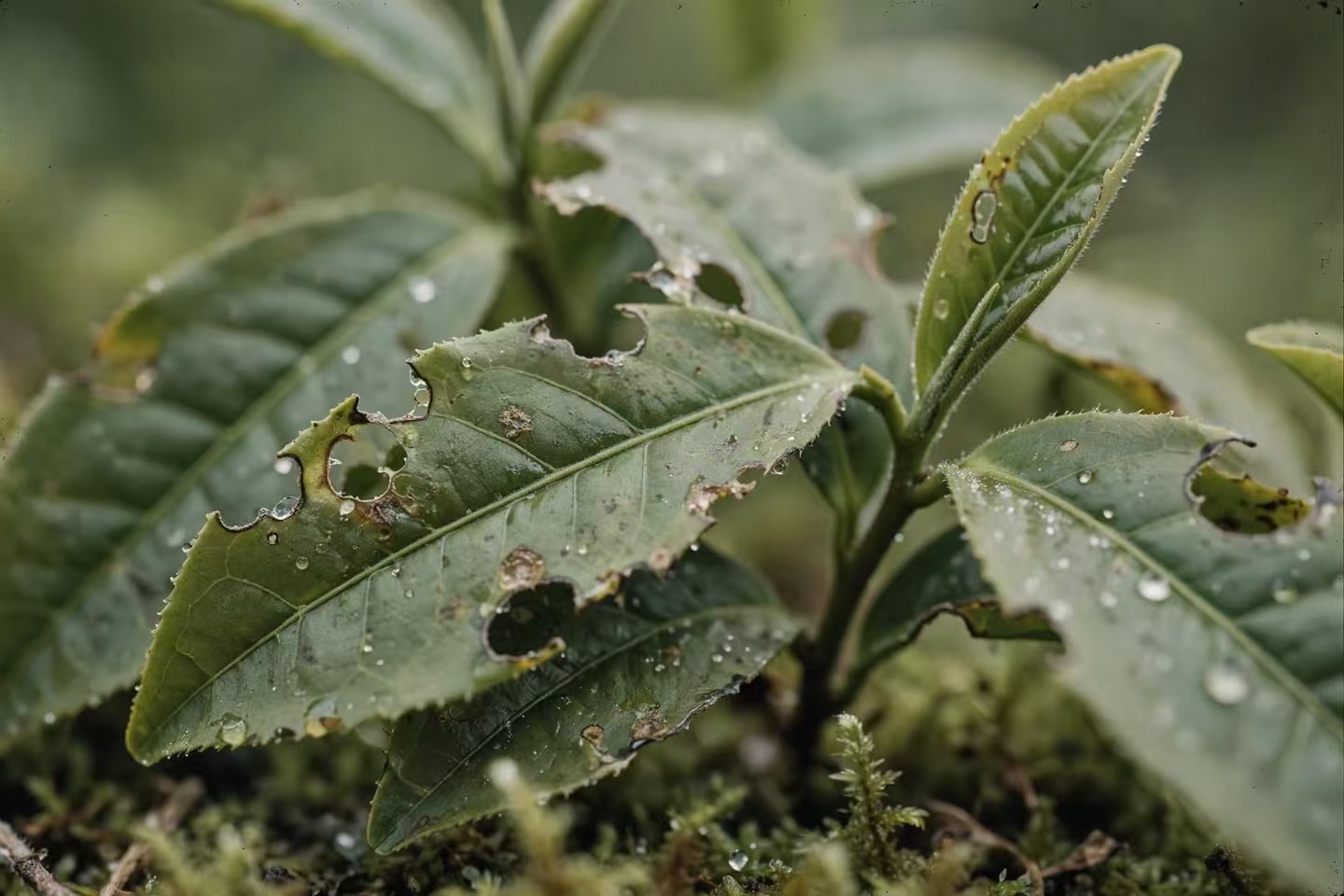
If you export tea from China to the European Union, one regulation governs almost every conversation about pesticide residues: Regulation (EC) No 396/2005. Yet it is widely misunderstood. Exporters often hear that the EU has a "zero residue" rule, or that a single magic number applies to every chemical. Neither is true. The reality is a per-substance system with a legal backstop, and knowing how it works is the difference between a smooth clearance and a rejected container.
This article walks through what the regulation actually says, where tea sits in it, and how to check the limits that matter for your shipment.
What Regulation 396/2005 actually is
Its full title is Regulation (EC) No 396/2005 on maximum residue levels of pesticides in or on food and feed of plant and animal origin. It is the EU's framework law for pesticide maximum residue levels, usually shortened to MRLs.
An MRL is the highest concentration of a pesticide residue that is legally permitted in or on a commodity. It is a compliance limit, not a statement about safety at a single sip, and not a permission to spray. Think of it as a line drawn in the law: stay under it and the product meets this particular requirement; cross it and it does not.
The regulation is amended frequently. Its annexes — II, III, IV and V — are updated as substances are approved, withdrawn or reviewed. That means the version you read today may not be the version in force when your tea arrives. Always work from the current consolidated text, which is linked in the sources below.
Where tea sits in the regulation
Tea is not an afterthought in this system; it is named. The commodity is described as "tea (dried leaves and stalks, fermented or otherwise, of Camellia sinensis)". It falls under Annex I, in category 06 — teas, coffee, herbal infusions and similar products — with the commodity code 0610000.
That code matters. When you search the official database or read a laboratory report, the code is how the commodity is identified precisely. Green tea, black tea and other processed forms of Camellia sinensis all trace back to this entry. Getting the category right is the first step in looking up the correct limits.
The two-tier limit system
Article 18(1) of the regulation sets out the core rule. Products listed in Annex I must not contain pesticide residues exceeding either:
- the MRLs set out in Annexes II and III; or
- a default value of 0.01 mg/kg, where no specific MRL is set for that product in Annexes II or III, or where the active substance is not listed in Annex IV.
The regulation's exact wording for the default is "0,01 mg/kg for those products for which no specific MRL is set out in Annexes II or III, or for active substances not listed in Annex IV". Unless a different default is fixed under Article 45(2), these default values are collected in Annex V.
This creates a practical two-tier structure:
- Where a specific MRL exists for a substance on tea, that number is the limit you must meet.
- Where no specific MRL exists, the 0.01 mg/kg default applies instead.
What the 0.01 mg/kg default is — and is not
This default value generates more confusion than anything else in EU pesticide rules. Let us be precise about what it means.
It is a legal compliance limit set at the level of quantification. In practice it sits at the LOQ — the lowest amount a laboratory can reliably quantify. It is often described as a "default MRL at the LOQ level".
It is not a blanket "zero residue" rule. A tea can contain a detectable residue and still comply, provided the residue is below the applicable limit.
It is not a safety threshold, and it is not a toxicological judgement that anything above it is dangerous. It is a regulatory line used where no substance-specific limit has been established. Confusing it with a health boundary leads to bad decisions on both sides of the trade.
For an exporter, the practical meaning is simple: for substances without a specific tea MRL, you need residues at or below 0.01 mg/kg, and your laboratory must be able to measure reliably at that level. If a lab's LOQ is higher than the limit it is trying to prove, its "not detected" result tells you very little.
Why you must look up values per substance
There is no single list of "tea numbers" that you can memorise. Specific MRLs exist for many active substances on tea, and each one must be looked up individually. A limit that applies to one fungicide says nothing about an insecticide.
The official place to do this is the EU Pesticides Database, maintained by the European Commission. It is the authoritative MRL search tool.
The database is a JavaScript application, which means its exact per-substance values are not available as simple plain text. That is why this article teaches you how to look values up rather than quoting numbers that could go stale. Quoting a figure from memory or from an old spreadsheet is exactly how exporters get caught out when an annex is amended.
When you use the database:
- Select the commodity group and the tea commodity (code 0610000).
- Search by active substance, not by brand name of a pesticide product.
- Check whether the value shown is a specific MRL or the default.
- Note the date of the database entry and confirm you are reading the current version.
If you cannot verify a number from the official source, treat it as unverified and send the question to your buyer or laboratory. Do not assert a limit you have not checked.
The ban on making non-compliant tea compliant
One rule deserves special emphasis because it catches exporters by surprise. Under Chapter III of the regulation — Articles 18 and 19 — Article 19 prohibits processing or diluting non-compliant products in order to bring them into compliance.
In plain terms: if a batch of tea has residues above the applicable MRL, you cannot fix the problem by mixing it with clean tea, by blending it down, or by running it through a process intended to reduce the residue. The law does not allow a non-compliant product to be laundered into a compliant one.
This matters commercially because blending is a normal part of the tea trade. Blending for flavour or consistency is one thing; blending to dilute a residue problem is another, and the regulation draws a firm line. Once a batch is known to be over the limit, the compliant response is to isolate it and deal with it openly, not to hide it in a larger lot.
The China side of the picture
Chinese production is governed by GB 2763, China's national standard for maximum residue limits of pesticides in food, which covers tea. It is updated periodically, so version numbers and individual limits change. This article does not quote specific GB numbers because they must be read from the current official standard.
A common question is whether Chinese limits are "looser" than EU ones. The honest answer is that it depends on the substance. Limits differ chemical by chemical, so a blanket comparison is misleading. What you can say is this: where the EU has no specific MRL for a substance, it applies the 0.01 mg/kg default, which is often stricter than a GB limit set specifically for that substance. That is a general tendency, not an absolute rule, and it should be checked case by case.
For an exporter, the practical takeaway is to produce to the stricter of the two where the destination is the EU, and to confirm the figure with the official source rather than assuming.
A working checklist for exporters
Before a shipment leaves for the EU:
- Identify the commodity code (0610000) correctly.
- List every active substance used, including those used upstream by growers.
- Look up each substance in the EU Pesticides Database under the current version.
- Apply the 0.01 mg/kg default wherever no specific MRL exists.
- Make sure your laboratory can quantify at the level you need to prove.
- Never blend or process a known non-compliant batch to bring it into line.
- Keep your reports and correspondence, because the annexes change and you may need to show which version you relied on.
Bottom line
Regulation 396/2005 is not a mystery and it is not a "zero residue" law. It is a per-substance MRL system with a 0.01 mg/kg default where no specific limit exists, applied to tea under commodity code 0610000. The numbers change, so your habit should be to look them up in the current official database, not to quote them from memory. And once a batch is over the limit, dilution or processing is not a remedy the law allows.
Sources & further reading
- Regulation (EC) No 396/2005 — https://eur-lex.europa.eu/eli/reg/2005/396/oj/eng
- EU Pesticides Database (MRLs) — https://ec.europa.eu/food/plant/pesticides/eu-pesticides-database/start/screen/mrls